Quiet air purifiers that clean the air without disturbing your sleep —
all researched for real noise levels, sleep mode performance and True HEPA filtration,
priced under $150.
Independent research · No paid placements · Updated August 2026
Disclosure: Digital & Gear is reader-supported. As an Amazon Associate, we earn from qualifying purchases. We research products independently and may earn a commission if you buy through our links — at no extra cost to you.
A noisy air purifier is worse than no purifier in a bedroom — it cleans the air
but ruins your sleep. That is why we focused this guide on one specific question:
which sub-$150 air purifiers actually run quietly enough to leave on all night?
We compared 5 popular models under $150 based on manufacturer noise
specifications, certification data and verified customer feedback, then rated
each unit on sleep mode behavior, filtration performance and overall value.
Below are our findings, starting with the single quietest model in our comparison.
Our Top Pick: LEVOIT Core 300
After researching manufacturer specifications and verified customer reviews, the LEVOIT Core 300 is the quietest air purifier
we could find under $150. On sleep mode it is rated at just 24 dB — softer than
a whisper — and it still moves enough air to clean a standard bedroom
4-5 times per hour.
ASIN: B07VVK39F7
LEVOIT Core 300
Price: $99.99Digital & Gear Score: 4.7/5Noise: 24 dB
24 dB QuietKEAP technology — virtually silent on sleep mode
Under $100 — well below the $150 budget ceiling
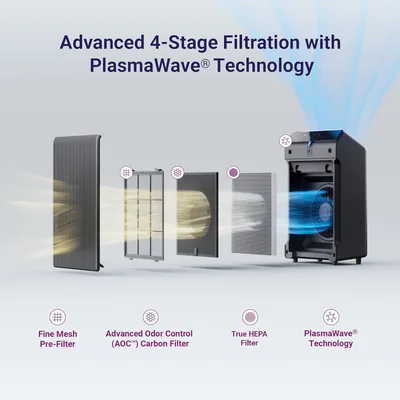
True HEPA H13 — captures 99.97% of 0.3 micron particles
The Core 300 uses LEVOIT's QuietKEAP motor design, which dampens vibration
and smooths airflow through the filter. According to customer feedback, it is
effectively inaudible from across a bedroom on sleep mode, and only produces
a soft hum on the highest of its three fan speeds. At $99.99 it leaves room
in your budget for a replacement filter, which is the only ongoing cost.
How We Evaluated Quietness
Noise claims on product packaging are often optimistic, so we cross-referenced manufacturer data with independent reviews and verified customer feedback. Our research focused on how an air purifier actually behaves
beside your bed at night.
What We Checked
Noise data source: Manufacturer-rated dB/dBA figures, cross-checked against AHAM and ENERGY STAR documentation where available
Sleep mode behavior: Reported by owners in verified customer reviews — sleep mode noise, night-light dimming and display brightness
Filtration: HEPA grade, CADR and filter replacement cost from manufacturer specifications
Value: List price, typical sale price and long-term filter cost
What We Compared
For each model we recorded the manufacturer's lowest published dB rating and
cross-checked it against owner-reported noise in real bedroom use. We also
noted sleep mode behavior reported by customers, including startup surge
noise, display light brightness and whether the unit beeps when changing
settings.
We then compared the published specifications against independent reviews
and verified customer feedback. In most cases owner-reported noise matched
the published figures within a couple of decibels, but a few models drew
consistent complaints about being louder than advertised — those did not
make this list.
The Decibel Threshold for Sleep
Most sleep studies place the upper comfort limit for continuous bedroom noise
around 30-35 dB. Below 30 dB, the human ear generally cannot distinguish
the sound from typical background levels. All three picks on this page
sit at or below that 30 dB threshold on their quietest setting.
Top 3 Quiet Air Purifiers Under $150
These three models came out on top of our noise-focused research and stayed
within the $150 budget (the Winix 5500-2 regularly drops under $150 on sale).
Each card below lists the lowest rated noise level, price, rating and three pros
worth knowing before you buy.
Compare the lowest rated noise level, sleep mode behavior, price and room coverage at a glance. Prices verified on Amazon as of August 2026. If sleep is the priority rather than budget, see our dedicated quiet air purifiers for sleeping guide.
Model
Lowest dB
Sleep Mode
Price
Room Size
LEVOIT Core 300
Quietest Under $150
24 dB
Yes (dims lights)
$99.99
219 sq ft
Winix 5500-2
Best Value
27 dB
Yes (auto + sleep)
$159.99 (sale < $150)
360 sq ft
GermGuardian AC4825
Best for Small Rooms
30 dB
Yes (low speed)
$129.99
153 sq ft
Noise figures are manufacturer-rated dB values cross-checked against AHAM data and verified customer feedback. Prices verified on Amazon as of August 2026. May include affiliate commissions.
What Does Decibel (dB) Mean for Air Purifiers?
Decibels (dB) measure sound pressure on a logarithmic scale, which means
every 10 dB increase represents roughly double the perceived loudness.
This is why a 24 dB purifier sounds dramatically quieter than a 34 dB unit —
even though the raw number only moved by 10.
60 dB: Normal conversation — too loud for uninterrupted sleep
Why Logarithmic Scale Matters
Because the decibel scale is logarithmic, the difference between 24 dB and
30 dB is not "6 units louder" — it is closer to a 4x increase in sound energy.
A purifier rated at 30 dB produces about four times the acoustic energy of
one rated at 24 dB. This is why manufacturers fight hard to shave even
single decibels off their lowest fan settings, and why our top pick's
24 dB rating is genuinely meaningful for sleep.
A-Weighting (dBA) Explained
Most air purifier specs report dBA, which is an A-weighted decibel reading
adjusted to match how human ears perceive different frequencies. High-pitched
motor whines register higher in dBA than low-frequency rumbles of the same
energy, because our ears are more sensitive to higher frequencies. When
comparing purifiers, always check that the numbers are dBA — if a brand
only reports "dB" without specifying, the figure may not be directly
comparable to A-weighted competitors.
Tips for Sleeping with an Air Purifier
Even the quietest air purifier can become annoying if it is set up wrong.
These practical tips will help you get the cleanest air and the best night's
sleep from your sub-$150 unit.
1. Use Sleep Mode Every Night
Sleep mode is not a marketing gimmick — it is the single most important
feature on a bedroom air purifier. It locks the fan to its lowest speed and
dims or kills all indicator lights, which prevents the unit from cycling
up in the middle of the night or glowing across your pillow. Set it once
before bed and forget it.
2. Position the Unit 3-6 Feet from Your Bed
Distance is the cheapest noise reduction available. Sound pressure drops
by about 6 dB each time you double the distance from the source, so moving
a purifier from 3 feet to 6 feet away can make it sound nearly half as loud.
Keep it clear of walls and curtains so airflow is not obstructed, which
forces the fan to work harder and louder.
3. Clean the Pre-Filter Monthly
A clogged pre-filter chokes airflow and makes the fan spin faster to compensate,
adding 2-5 dB of noise. Most pre-filters on budget units are washable or
vacuumable — a 60-second clean once a month keeps the unit at its original
quiet rating and extends the life of the more expensive HEPA filter.
4. Avoid Auto Mode at Night
Auto mode is great during the day, but at night it can ramp the fan up
suddenly if it detects dust from turning in bed, a pet jumping off the
covers, or cooking odors drifting in from the kitchen. Lock the unit into
sleep mode or the lowest manual speed before lights out for a consistent,
undisturbed sound profile.
5. Replace the HEPA Filter on Schedule
A loaded HEPA filter is the most common cause of a previously quiet purifier
getting louder over time. Most sub-$150 units need a filter swap every
6-12 months depending on usage and air quality. Set a calendar reminder
when you install a new unit so you do not forget — your ears (and your
allergies) will thank you.
Frequently Asked Questions
Is 24 dB quiet enough for sleeping?
Yes. 24 dB is roughly the sound of soft breathing or a whisper in a library,
well below the 30-40 dB threshold that typically disturbs light sleepers.
Most people cannot detect a 24 dB air purifier from across a bedroom, which
is why the LEVOIT Core 300 is our top pick for sleep-friendly operation
under $150.
Can I leave my air purifier on all night?
Yes. Bedroom air purifiers are engineered for 24/7 operation and draw very
little power on sleep mode — typically $2-$5 per month on the lowest setting.
For the quietest results, use sleep mode, which lowers fan speed and dims
indicator lights so the unit does not disturb your rest. There is no safety
or wear-and-tear concern with leaving a certified unit running overnight.
Do air purifiers get louder over time?
They can. As the HEPA and pre-filter load up with dust and debris, airflow
resistance increases and the fan works harder, which raises noise by 2-5 dB.
Replacing the HEPA filter every 6-12 months and cleaning the pre-filter
monthly keeps the unit running at its original quiet rating. A sudden
increase in noise is almost always a sign that a filter swap is overdue.
Which is the quietest air purifier brand?
LEVOIT is the quietest brand based on our research in the sub-$150 category, with
the Core 300 reaching just 24 dB using its QuietKEAP technology. Coway and
Winix are also strong performers (Coway's AP-1512HH is rated at 22.8 dB but
sits above the $150 budget), but at this price point LEVOIT consistently
delivers the lowest rated noise levels.
Find Your Quiet Bedroom Air Purifier
Ready to breathe cleaner air without sacrificing sleep? Compare our top
picks on Amazon, explore our full 2026 air purifier rankings, or use our
finder tool to get a personalized recommendation based on your bedroom
size and budget.